
This post contains affiliate links. If you buy through them, Boots on the Dirt Road may earn a small commission at no extra cost to you.
Walk farm lanes for long enough and you start to see soil differently. I have written before about the five kinds of mud on the farm road near me, and about the afternoons I have spent leaning on gates while somebody who works the land explains why one field drains and the next one does not. I came to farm country for the walking. I stayed curious about the ground.
This post is about what happened when that curiosity followed me home, onto a windowsill, in the months when the lanes are too wet to enjoy.
What the farmers taught me about soil
The thing that surprised me most, talking to people who farm, is how differently they talk about soil compared to how I used to think about it. To me it was just dirt, the brown stuff the crops stood in. To them it is something alive, with a structure and a history, something that can be looked after or worn out over a few seasons.
One farmer I met by a field of winter barley picked up a handful at the edge of the track, broke it in his fingers and talked about it the way other people talk about the weather. Crumbly was good. Sticky and grey was not. The difference, he said, took years to build and very little time to lose. I have thought about that handful a lot since.
You do not notice the ground until somebody shows you how much is going on in it.
Bringing a bit of it indoors
In the darkest part of the year my walks get shorter and the evenings get longer. A couple of winters ago I started growing a few herbs on the kitchen windowsill, mostly so there would be something green in the house between November and March. Thyme, a pot of parsley, some chives that never quite did what I hoped.
My first mistake was the obvious one for someone who spends his weekends on farm tracks. I thought I knew about soil now, so I would just use some from outside. That was wrong twice over.
The lane is not mine to dig
Almost every field I walk past belongs to somebody, and the verges and banks are part of their land too. Taking soil from a farm lane is not a small thing to the person who farms it, any more than taking stones off their wall would be. Leave it where it is.
Ground soil and pot soil are different jobs
Even soil from my own patch did not work in pots. In the ground, soil has worms, roots and the whole field underneath it to drain into. Crammed into a pot on a windowsill it packed down hard, stayed wet at the bottom and dry on top, and the herbs sulked. Pots need a potting mix made for containers, something that stays loose and drains, rather than a scoop of the garden.
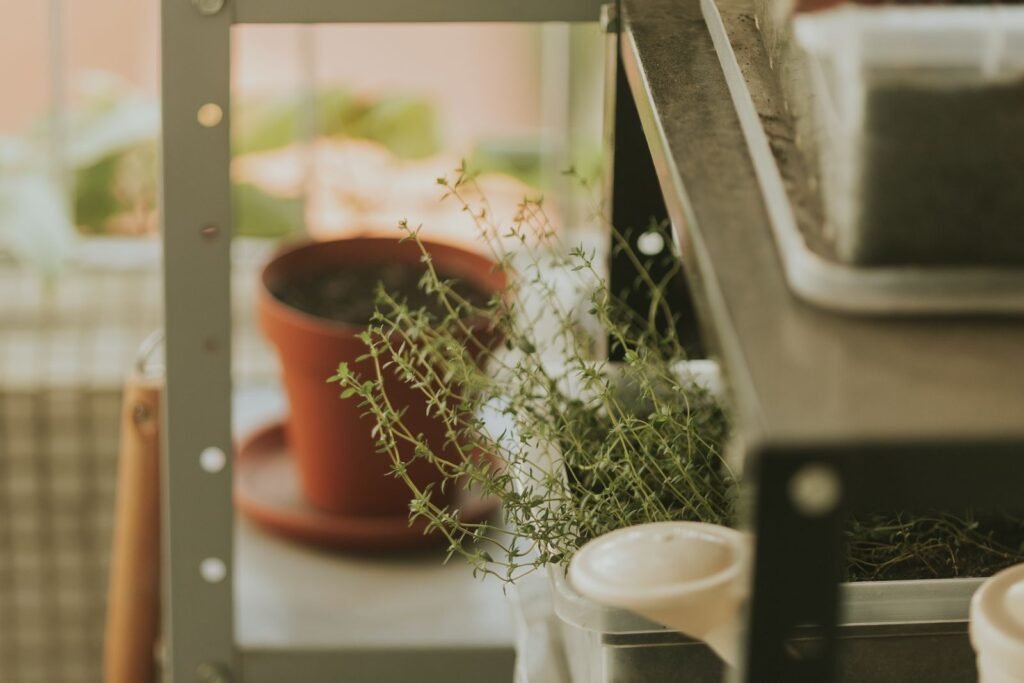
The potting mix I have been looking at
So these days the windowsill gets proper potting mix. Rosy Soil is one of the brands making mix specifically for indoor plants, and if you are starting a few pots of your own this winter, you can have a look at Rosy Soil’s indoor potting mix and see whether it suits what you want to grow.
I am a walker, not a horticulturist, so I am not going to tell you exactly what each of your plants wants. Different herbs and houseplants like different things, and the label on the plant, or a good gardening book, is a better guide than a walking blog. What I can tell you is that the move from “some dirt from outside” to a mix made for pots was the single change that made my windowsill work.
A few windowsill habits that stuck
Water less than you think. My first herbs drowned rather than dried out. A pot that drains, and a finger pushed into the top of the mix before watering, solved most of that.
Turn the pots. Everything leans towards the window. A quarter turn every few days keeps them from growing sideways.
Accept the winter pace. Nothing grows quickly on a windowsill in December, and that is fine. It is the same lesson the lanes teach in mud season: some months are for waiting.
Back out on the lane
The odd thing is that the windowsill made me a better walker in the end. Having fussed over a few pots all winter, I walk past fields in spring with a lot more respect for the people who manage hundreds of acres of the stuff, in all weathers, for a living. I look at the colour of a freshly turned field differently now. I notice which gateways stay waterlogged and which dry out.
If you want to start a few pots of your own while the lanes are wet, a decent potting mix is the place to begin. You can find Rosy Soil’s indoor potting mix here. And leave the farm lane’s soil where it belongs, on the farm.
Photos: Prathyusha Mettupalle and Letícia Alvares via Pexels.